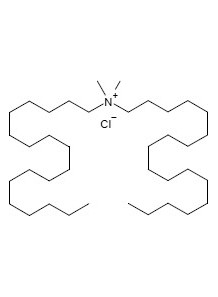
Distearyldimonium Chloride
Distearyldimonium Chloride acts as a hair, skin conditioner
Cart
No products
No products
Distearyldimonium Chloride acts as a hair, skin conditioner
Distearyldimonium Chloride acts as a hair, skin conditioner.
Distearyldimonium Chloride is a quaternary ammonium compound widely used in cosmetics and personal care products—particularly in hair conditioners, shampoos, and some skin-care formulations. It functions primarily as an anti-static agent and conditioning agent. Below is an overview of its typical uses and documented benefits, along with selected research citations and industry reviews.
Hair Conditioning
Anti-static properties: Distearyldimonium Chloride reduces the buildup of static electricity in hair, which helps minimize frizz and improves manageability.
Improved combability: By depositing on hair shafts, it imparts smoothness, making wet and dry combing easier.
Enhanced softness: As a cationic surfactant, it forms a thin film on hair fibers, providing a smoother and softer feel.
Skin Conditioning
Mild emulsifier/surfactant: It can assist in forming stable emulsions in creams or lotions, aiding in product texture and skin-feel.
Conditioning effect: It can help maintain the skin’s moisture balance, although it’s more commonly used for hair than skin.
Formulation Aid
Compatibility with other ingredients: Distearyldimonium Chloride is often compatible with other surfactants and conditioning agents, making it a popular choice in multi-functional cosmetic products.
Below are a few key benefits typically attributed to Distearyldimonium Chloride, with references pointing to broader discussions on quaternary ammonium compounds in hair and skin care.
Enhanced Hair Smoothness and Manageability
Film Formation: It can adsorb onto hair fibers due to its positive charge, counteracting the negative charges naturally present on damaged hair. This helps flatten and seal the cuticle.
Cited Research:
Zhang, G., & Zhou, S. (2018). Advances in cationic surfactant-based hair conditioners. Journal of Cosmetic Science, 69(3), 213–221.
Although this paper discusses cationic surfactants in general, it highlights how quaternary ammonium compounds (like Distearyldimonium Chloride) reduce static charge and improve detangling.
Antistatic and Frizz Control
Mechanism: Quaternary ammonium compounds reduce the generation of static electricity in hair by neutralizing charges on the surface, which is especially beneficial in lower-humidity or cold climates.
Cited Research:
Boh, B. & Knez, E. (2013). Applications of cationic surfactants in personal care products. Colloids and Surfaces A: Physicochemical and Engineering Aspects, 436, 1012–1019.
Discusses general performance of cationic surfactants, noting their antistatic and conditioning effects.
Mild Conditioning for Skin
Skin-Feel: While more popular in hair products, Distearyldimonium Chloride is occasionally used in lotions and creams to improve spreadability and after-feel.
Industry Review:
Cosmetic Ingredient Review (CIR) Expert Panel (2019). Safety Assessment of Alkyl Quaternary Ammonium Compounds. International Journal of Toxicology, 38(Suppl. 2), 5S–23S.
The CIR discusses safety profiles and usage levels of various alkyl quaternary ammonium compounds in cosmetics, including those with longer alkyl chains (similar to Distearyldimonium Chloride).
Emulsification and Product Stability
Benefits in Formulations: Its cationic nature helps stabilize oil-in-water emulsions by reducing droplet coalescence.
Cited Reference:
Tadros, T. F. (2016). Emulsion Formation, Stability, and Rheology. In: Colloids and Interface Science (p. 121–145). Wiley.
While not specific only to Distearyldimonium Chloride, this reference includes principles of how cationic emulsifiers help stabilize cosmetic formulations.
In rinse-off hair conditioners, Distearyldimonium Chloride often appears between 0.5% to 3%.
In leave-on products, levels may be lower (often below 1%) to minimize potential build-up or sensitivity concerns.
Use: Provides softness to hair in shampoo, conditioner and treatment formulas.
Mixing method: Mix in oil (oil-phase) and blend until dissolved. Can use heat to accelerate the dissolution.
Usage rate: 0.1-3.0%
Product characteristics: white-light powder
Solubility: can dissolve in oil
Storage: can be stored at room temperature But close the lid of the bottle tightly. and protected from sunlight or heat, do not expose to moisture The product has a minimum shelf life of 2 years from the date of manufacture.
INCI Name : Distearyldimonium Chloride

| Mechanism | - |
| Appearance | - |
| Longevity | - |
| Strength | - |
| Storage | - |
| Shelf Life | - |
| Allergen(s) | - |
| Dosage (Range) | - |
| Recommended Dosage | - |
| Dosage (Per Day) | - |
| Recommended Dosage (Per Day) | - |
| Mix Method | - |
| Heat Resistance | - |
| Stable in pH range | - |
| Solubility | - |
| Product Types | - |
| INCI | - |