


“Closest Ca2+ evidence: epidermal calcium gradients regulate keratinocyte differentiation, barrier formation and permeability-barrier homeostasis; not direct proof of calcium chloride as a cosmetic active.”
Calcium Chloride is an inorganic calcium salt used at low levels in cosmetics as a rheology‑active electrolyte, viscosity controller, mild astringent and moisture‑modulating helper for gels, toners and creams.
Calcium Chloride™ is an inorganic calcium salt that is highly soluble in water and strongly hygroscopic, used in cosmetic formulations as a rheology‑active electrolyte, texture modifier and mild astringent supporting clean, fresh skin feel.
Because the Ca²⁺ ion strongly interacts with anionic and hydrocolloid polymers, small amounts of calcium chloride can tighten or loosen gel networks, influence water binding and improve emulsion robustness when engineered correctly. It is widely used in food and industrial applications and is considered low‑hazard at the very low cosmetic use levels typically employed.
In formulations, calcium chloride functions mainly as a viscosity‑controlling electrolyte, cosmetic astringent and moisture‑modulating helper rather than a primary treatment active. It is especially useful in gels, hydrogel masks, toners and high‑water systems where fine tuning of flow, snap and non‑sticky after‑feel is required.
Product Description: Calcium chloride provides a concentrated source of Ca²⁺ ions that interact with charged polymers and structured water domains in the aqueous phase. At low levels it can increase or decrease apparent viscosity depending on the polymer family: in some carrageenan, alginate or gellan systems Ca²⁺ promotes cross‑linking and gel strength, while in other thickener/emulsifier systems excess electrolyte shortens chains and reduces viscosity. In skin‑contact products it also behaves as a cosmetic astringent, giving a light tightening or toning sensation that can make toners, gels and masks feel fresher and less tacky. Its hygroscopic nature allows it to bind water and support humectant systems (e.g., with glycerin), helping manage water activity and texture stability without acting as a primary moisturizer by itself.
Usage: Suitable for high‑water formulations such as facial toners, watery lotions, gels, hydrogel and sheet masks, eye patches, light emulsions (creams/lotions), and some makeup systems (foundations, primers, eye products) where fine control of viscosity, snap and a mild astringent feel is desired.
Mixing method:
- Pre‑weigh the required amount and dissolve completely into the water phase (deionized water) before adding thickeners, polymers or emulsifiers.
- Add slowly under stirring to avoid local high‑concentration zones that can over‑crosslink or precipitate sensitive polymers.
- For gels or hydrogel masks based on alginate/carrageenan/gellan, run pilot batches: small changes in calcium level can significantly change gel firmness and brittleness.
- In emulsions, add dissolved calcium chloride to the aqueous phase and homogenize before emulsification; avoid very high levels that may destabilize anionic emulsifiers or reduce viscosity.
Usage rate: 0.05–1% (typical 0.1–0.5% in leave‑on systems; up to ~1% in gels, masks and rinse‑off formulas where stronger viscosity or astringent effects are desired).
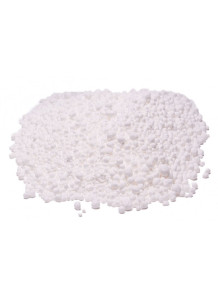
Product characteristics: White to off‑white, odourless, strongly hygroscopic solid (flakes, granules or powder); freely soluble in water; may cake or clump on exposure to ambient humidity.
Solubility: Highly water‑soluble; soluble in lower alcohols; insoluble in oils and non‑polar solvents. Use only in the aqueous phase or in water‑rich systems.
Storage: Store in a tightly closed, moisture‑protected container at room temperature, away from direct heat and humidity. Because the material is very hygroscopic, keep the lid closed promptly after use to minimize clumping and changes in assay.
Preservative‑Free raw material
No products
Calcium Chloride is an inorganic calcium salt used at low levels in cosmetics as a rheology‑active electrolyte, viscosity controller, mild astringent and moisture‑modulating helper for gels, toners and creams.
Calcium Chloride™ is an inorganic calcium salt that is highly soluble in water and strongly hygroscopic, used in cosmetic formulations as a rheology‑active electrolyte, texture modifier and mild astringent supporting clean, fresh skin feel.
Because the Ca²⁺ ion strongly interacts with anionic and hydrocolloid polymers, small amounts of calcium chloride can tighten or loosen gel networks, influence water binding and improve emulsion robustness when engineered correctly. It is widely used in food and industrial applications and is considered low‑hazard at the very low cosmetic use levels typically employed.
In formulations, calcium chloride functions mainly as a viscosity‑controlling electrolyte, cosmetic astringent and moisture‑modulating helper rather than a primary treatment active. It is especially useful in gels, hydrogel masks, toners and high‑water systems where fine tuning of flow, snap and non‑sticky after‑feel is required.
Product Description: Calcium chloride provides a concentrated source of Ca²⁺ ions that interact with charged polymers and structured water domains in the aqueous phase. At low levels it can increase or decrease apparent viscosity depending on the polymer family: in some carrageenan, alginate or gellan systems Ca²⁺ promotes cross‑linking and gel strength, while in other thickener/emulsifier systems excess electrolyte shortens chains and reduces viscosity. In skin‑contact products it also behaves as a cosmetic astringent, giving a light tightening or toning sensation that can make toners, gels and masks feel fresher and less tacky. Its hygroscopic nature allows it to bind water and support humectant systems (e.g., with glycerin), helping manage water activity and texture stability without acting as a primary moisturizer by itself.
Usage: Suitable for high‑water formulations such as facial toners, watery lotions, gels, hydrogel and sheet masks, eye patches, light emulsions (creams/lotions), and some makeup systems (foundations, primers, eye products) where fine control of viscosity, snap and a mild astringent feel is desired.
Mixing method:
- Pre‑weigh the required amount and dissolve completely into the water phase (deionized water) before adding thickeners, polymers or emulsifiers.
- Add slowly under stirring to avoid local high‑concentration zones that can over‑crosslink or precipitate sensitive polymers.
- For gels or hydrogel masks based on alginate/carrageenan/gellan, run pilot batches: small changes in calcium level can significantly change gel firmness and brittleness.
- In emulsions, add dissolved calcium chloride to the aqueous phase and homogenize before emulsification; avoid very high levels that may destabilize anionic emulsifiers or reduce viscosity.
Usage rate: 0.05–1% (typical 0.1–0.5% in leave‑on systems; up to ~1% in gels, masks and rinse‑off formulas where stronger viscosity or astringent effects are desired).
Product characteristics: White to off‑white, odourless, strongly hygroscopic solid (flakes, granules or powder); freely soluble in water; may cake or clump on exposure to ambient humidity.
Solubility: Highly water‑soluble; soluble in lower alcohols; insoluble in oils and non‑polar solvents. Use only in the aqueous phase or in water‑rich systems.
Storage: Store in a tightly closed, moisture‑protected container at room temperature, away from direct heat and humidity. Because the material is very hygroscopic, keep the lid closed promptly after use to minimize clumping and changes in assay.
Preservative‑Free raw material
| Mechanism | - |
| Appearance | - |
| Longevity | - |
| Strength | - |
| Storage | - |
| Shelf Life | - |
| Allergen(s) | - |
| Dosage (Range) | - |
| Recommended Dosage | - |
| Dosage (Per Day) | - |
| Recommended Dosage (Per Day) | - |
| Mix Method | - |
| Heat Resistance | - |
| Stable in pH range | - |
| Solubility | - |
| Product Types | - |
| INCI | - |